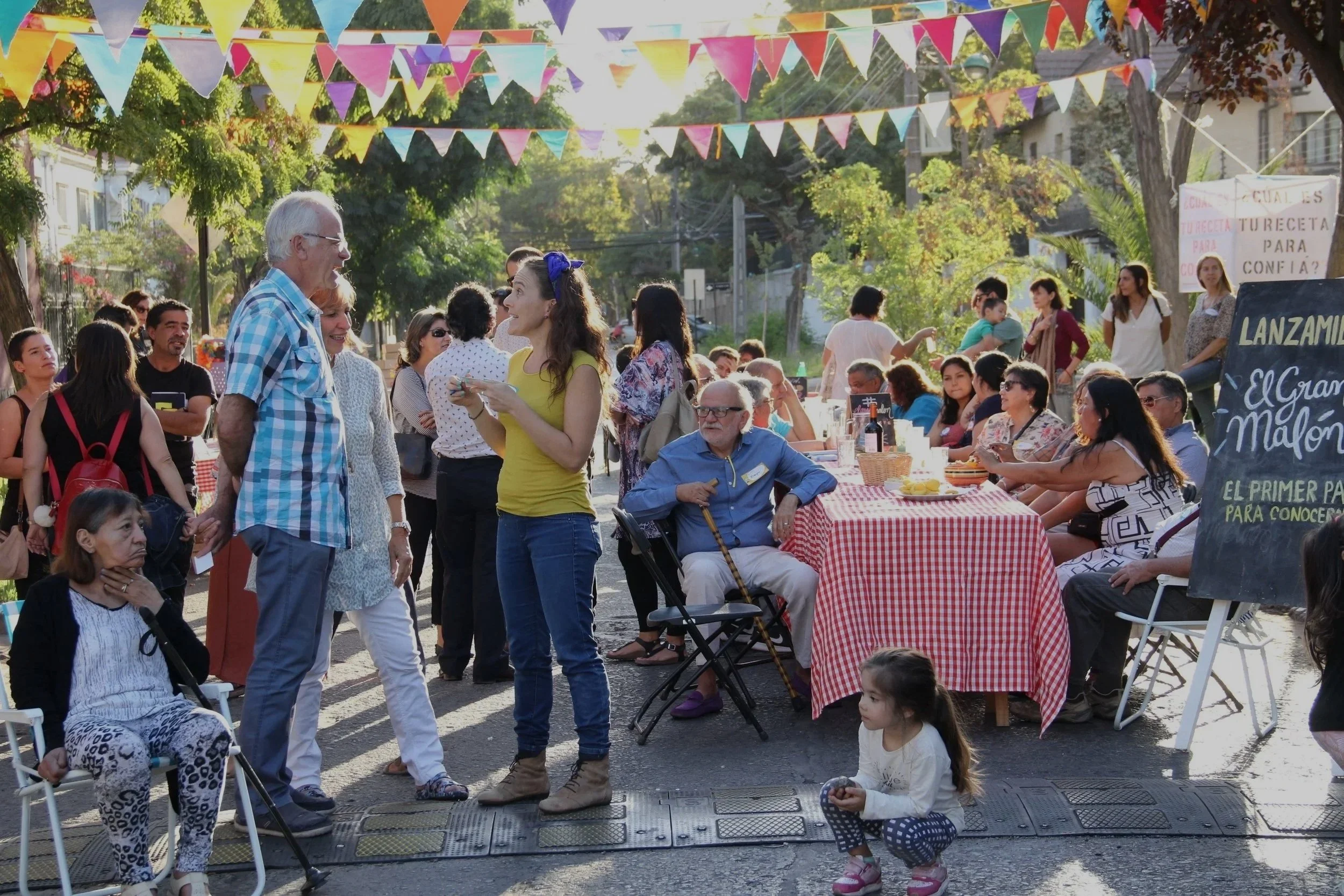
A simple invitation
In Chile, El Gran Malón invites neighbours to bring tables into shared spaces, contribute food and spend time together. The initiative was created by Ciudad Emergente.
Invite the people nearby, choose somewhere welcoming, and make room for conversation. For a local version, we suggest making clear that everyone is welcome, whether or not they can bring anything.
We are sharing the idea to explore how it might work in different communities. Just About Everyone is not the organiser of the original initiative.
Could it work where you live?
- Would you organise, help or simply attend?
- Where could it happen, and what might make it difficult?
- Who might be left out, and how could you include them?
Resources from the organisers
The organisers describe a free digital kit with planning guidance, invitations, games and conversation prompts. Their organising page explains the approach and how to access materials, in Spanish.
Explore the official organising resources ↗
Choose arrangements that suit your community and check local requirements for using shared spaces.
What could we learn?
Does one shared meal lead to relationships that continue afterwards? We would like to hear who joined, who was missing, and whether neighbours stayed in touch.